Why I Wrote “Politics from the Cheap Seats”
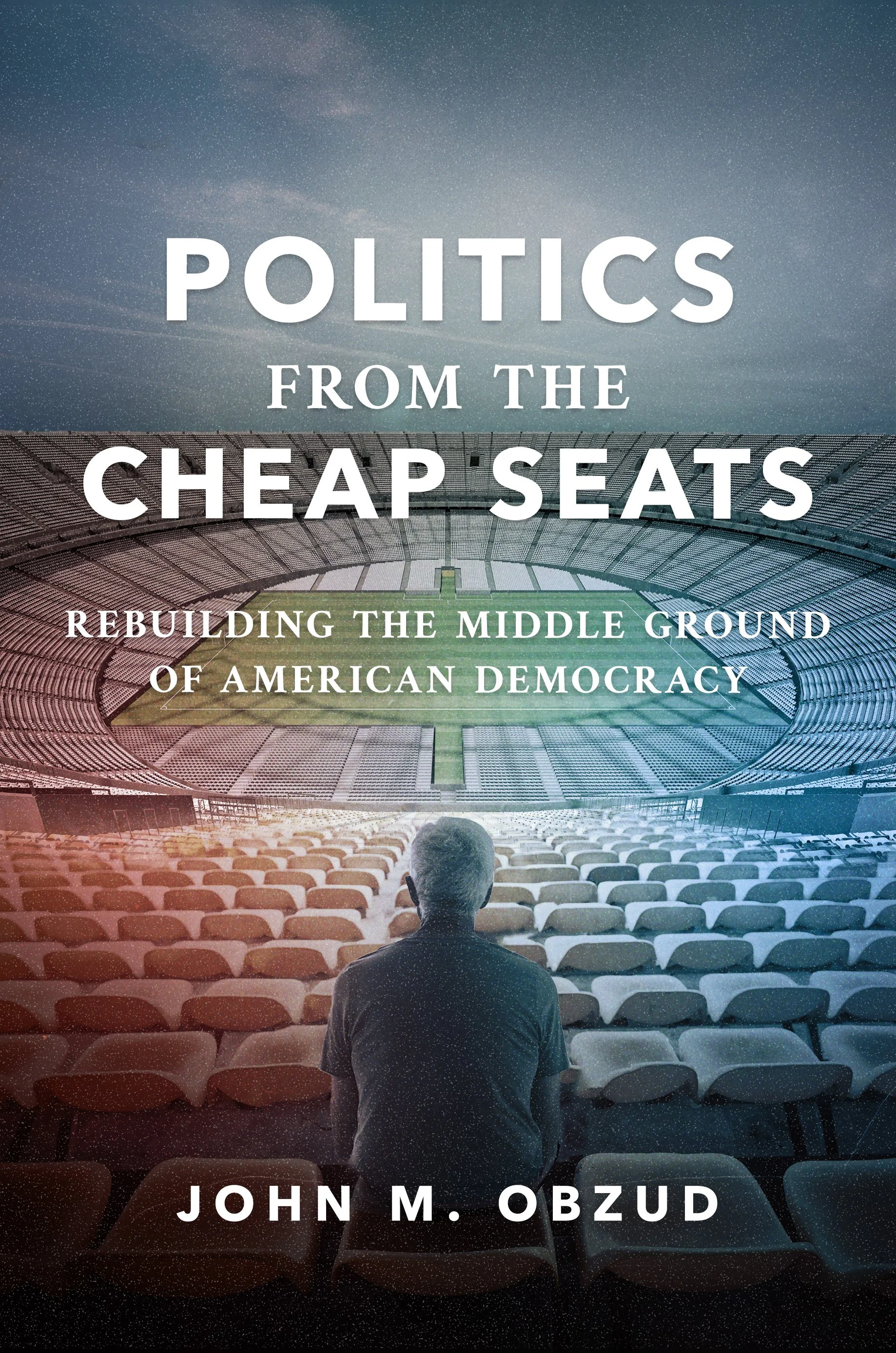
Politics from the Cheap Seats is my effort to step back from the noise of modern politics and look at what has happened to the country from the perspective of an ordinary citizen who has been watching, listening, learning, and living through it for a long time. It is not a book written from the far left or the far right. It is written from the middle — not the middle as weakness, but the middle as common sense, balance, perspective, and problem solving.
The title comes from a simple image: sitting in the cheap seats and watching the show. From there, you can see the whole field. You may not be on the stage, and you may not be calling the plays, but you can still tell when the game is being played well and when it is going off the rails. That is really the spirit of this book. It is a plainspoken look at American politics, culture, leadership, and civic life from someone who has watched the country change over many decades and believes we have drifted too far from the center.
The book begins with my own early experiences growing up in America in the 1950s, 60s, and beyond. It reflects on the lessons of family, community, hard work, and citizenship that shaped how many of us understood the country and our responsibilities within it. It also looks at how America changed through major events, social movements, cultural shifts, and political turning points. Those early chapters are not there just for nostalgia. They help explain the contrast between a time when people often disagreed but still seemed more grounded in shared values, and the world we live in now, where everything feels louder, sharper, faster, and more divided.
From there, the book moves into what I call the “arena of noise.” That is where much of modern public life now seems to operate. Politics has become performance. Media has become spectacle. Social media has accelerated outrage, shortened attention spans, and pushed people toward reaction instead of reflection. Institutions that should help inform, guide, and steady the public often add to the confusion instead. Bureaucracy grows, money distorts priorities, generational divides widen, higher education loses trust, the media chases conflict, Hollywood signals culture more than substance, algorithms feed division, and even important matters of faith, world order, and national purpose get swallowed up by noise. One of the central themes of the book is simple: when everything is urgent, critical, breaking, and historic, then nothing can be understood clearly. Soundbites thrive, and solutions die.
The book also addresses Donald Trump because no serious look at modern American politics can ignore him. He did not create every problem, but he changed the tone, the pace, and the temperature of politics in a major way. His rise exposed weaknesses that were already there — distrust in institutions, anger at elites, frustration with politics as usual, and a deep sense among many Americans that they were no longer being heard. At the same time, the response to Trump often became its own form of political obsession and distortion. In that sense, he became both a symptom and a force multiplier of a larger national unraveling. The point of the book is not to relitigate every Trump argument. It is to understand what his era revealed about us and where that leaves the country now.
Another key part of the book is a return to the basic structure of American government — the branches, the institutions, and the governing process itself. Somewhere along the way, we have lost sight of the fact that politics is supposed to be about governing. It is supposed to be about solving problems, balancing interests, making hard choices, and serving the public. Instead, too often it has become a game of blaming, branding, posturing, fundraising, and permanent campaigning. Politicians accuse the other side of “playing politics” while doing the very same thing themselves. The irony is hard to miss. The system is politics, but its purpose is supposed to be governing for the people, not endless partisan theater.
That brings the book to its most important question: where do we go from here? That is where the heart of the book really lives. Politics from the Cheap Seats is not just an observation deck. It is also a call to rebuild the middle ground of American democracy. The answer is not to pretend we can erase disagreement, nor is it to force false unity. The answer is to restore the habits and values that make democratic life work: trust, leadership, responsibility, listening, accountability, and a willingness to solve real problems instead of simply scoring points.
That is why the book introduces the Middle America Contract. This is not about ideology, party labels, or empty slogans. It is a practical statement of commitments rooted in common sense and civic responsibility. It reflects the belief that the middle ground is not merely a place on the political spectrum. It is a way of thinking. It is a place where people can disagree without hating one another, where compromise is not a dirty word, where leadership still matters, and where citizenship is more than complaint. The book argues that if we want a healthier democracy, we need more than better politicians. We need better habits as citizens and a renewed commitment to the values that hold a republic together.
In the end, this book is not written in despair. It is written with concern, honesty, and hope. It recognizes how much trust has been lost and how much damage has been done by division, noise, and performative politics. But it also believes the country is still capable of finding its footing again. Common ground is not gone forever. It has simply been buried under too much shouting, too much distraction, and too little courage.
Politics from the Cheap Seats is my way of saying that the people in the stands still matter. The ordinary citizen still matters. The country does not belong only to the loudest voices, the wealthiest interests, the most extreme activists, or the most ambitious politicians. It belongs to all of us. And if we want to rebuild trust, restore leadership, and recover a sense of civic responsibility, the way forward will not come from the far edges. It will come from the middle — steady, practical, and determined — where solutions still have a chance.