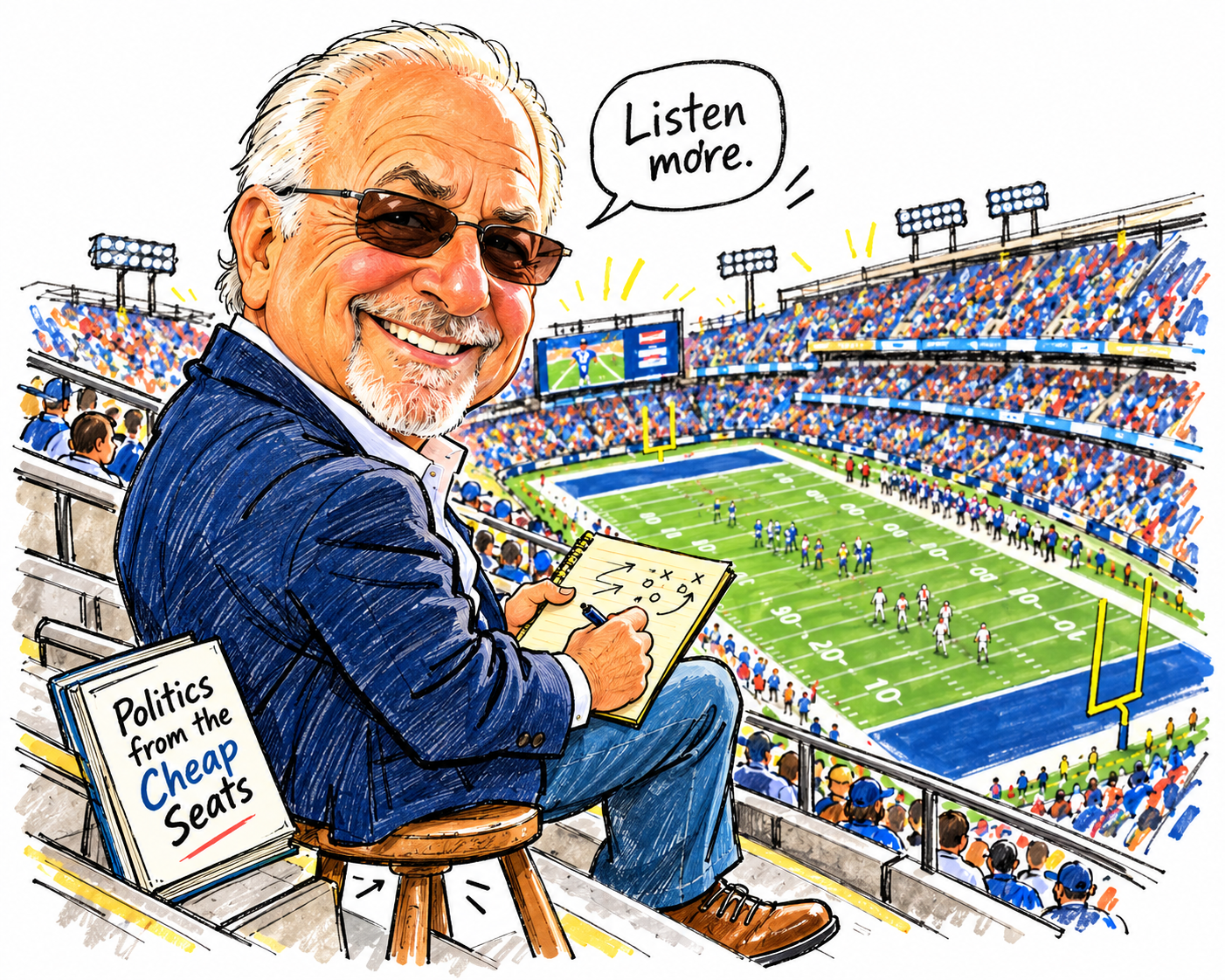
More Lessons from the Cheap Seats
November 4, 2026
The American electorate has spoken. The 2026 midterm elections have shifted the balance of power in Washington, with Democrats winning control of both houses of Congress.
Donald Trump wasn’t officially on the ballot, but make no mistake, his presidency was very much part of this election.
The voters have delivered a message. But what exactly is that message?
Did America move to the left? Or did voters simply move away from the right, searching for something closer to the middle?
Those are two very different conclusions.
Our two-party system often presents Americans with what appear to be only two choices, two competing points of view. Yet the American electorate is far more complicated than that. Millions of citizens hold opinions that cross party lines. They may be conservative on one issue, liberal on another, and somewhere in between on many others.
Perhaps the political pendulum isn’t simply swinging from right to left. Perhaps Americans are searching for a balance that seems increasingly difficult to maintain.
And then there is the noise.
The winners celebrate. The losers regroup. The media analyzes every political implication. Before long, the next election campaign begins.
But what about governing?
The American people still face concerns about affordability, healthcare, national security, and the future of their country. Those concerns don’t disappear when the votes are counted.
Political disagreement is part of democracy. So are constitutional checks and balances. But disagreement should not become an excuse for abandoning the responsibility to govern.
From the cheap seats, perhaps the most important question isn’t whether America moved left or right.
It’s whether our elected leaders can move forward.
The Middle America Contract and its foundation of Trust, Leadership, and Civic Responsibility offer a simple reminder: Winning elections is not the end game. Serving the American people is the responsibility that follows.
Will the noise grow louder? Will confrontation replace cooperation? Or will both parties recognize that the electorate expects something more?
We don’t have those answers this morning.
But we certainly have the right to ask the questions.
Cheap Seats Observation (CSO)
The votes are in. The electorate has spoken. The question now isn’t who won the election, but whether governing can win over campaigning.
The end game never ends. Democracy endures.
John M. Obzud
Author, Politics from the Cheap Seats: Rebuilding the Middle Ground of American Democracy